Aindo Officially Joins AICROplus
Aindo announces its membership in AICROplus to integrate Artificial Intelligence and synthetic data into clinical research, accelerating healthcare innovation.
Our commitment to trust, security, and responsibility.
At Aindo, we know that trust is the foundation of every data-driven innovation. Whether you are a healthcare organization, a life sciences company, a research institution, or a public agency, you can rely on Aindo for solutions that are not only cutting-edge, but secure, compliant, and designed to operate in regulated environments.
Aindo adopts internationally recognized standards in data privacy, quality management, information security, and AI governance. Our solutions are designed in alignment with GDPR, the AI Act, the NIST framework, and ISO standards, to ensure that data, models, and processes are managed in a secure, auditable, and responsible manner.
Certified GDPR compliance: your data is handled in full compliance with European privacy regulations.
Europrivacy™/® is the only GDPR certification currently officially recognized across all EU and EEA Member States. It assesses compliance of data processing activities under GDPR and national regulations. Managed by the European Centre for Certification and Privacy (ECCP) and overseen by an International Board of Experts, it aligns with Article 42 of the GDPR.
The scheme provides a comprehensive framework to evaluate compliance, including assessing lawfulness, data subjects' rights, data protection by design, management of data breaches, and specific checks for technology and domain-specific requirements. The certification requires rigorous assessment across multiple dimensions of data protection. It reduces legal and financial risk, reinforces trust and credibility, and complements our quality and security management systems.
Driving excellence: We continuously improve our processes to exceed client expectations and deliver reliable, value-driven outcomes.
ISO 9001 is the most widely used quality management standard. Its requirements define how to establish, implement, maintain, and continually improve a QMS (Quality Management System).
The standard ensures robust quality control. It helps identify and eliminate inefficiencies, reduce waste, streamline operations, and promote informed decision-making. It encourages ongoing optimization through regular audits and reviews.
Protecting what matters most: Your information is protected with robust, internationally recognized security practices.
ISO 27001 is the leading international standard for information security management. It outlines best practices for establishing, implementing, maintaining, and continually improving an ISMS (Information Security Management System).
The standard ensures a structured approach to protecting sensitive data, managing risks, and preventing security breaches. It helps organizations identify vulnerabilities, implement effective security controls, and ensure compliance with regulatory requirements. Through regular audits and risk assessments, it fosters continuous improvement in cybersecurity resilience.
The NIST Cybersecurity Framework (CSF) and NIST Privacy Framework, developed by the U.S. National Institute of Standards and Technology, provide comprehensive guidelines for identifying, protecting against, detecting, responding to, and recovering from cybersecurity threats. They are widely adopted worldwide as a reference for building resilient, risk-aware digital infrastructures.
Security and privacy by design: our platform is built on internationally recognized guidelines for managing cybersecurity risk and protecting personal data.
Aindo aligns its security and privacy practices with the NIST framework to ensure that its synthetic data platform is built on a structured, risk-based approach to information security. This means systematic threat identification, robust access controls, continuous monitoring, and clear incident response procedures — giving healthcare organizations, life sciences companies, and public institutions the assurance that sensitive data environments are managed with rigor and accountability.
The EU AI Act, which entered into force in August 2024, introduces a risk-based regulatory framework for artificial intelligence systems used within the European Union. The Regulation classifies AI applications according to their level of risk and sets requirements on transparency, human oversight, data governance, robustness, security, documentation, and accountability, with particular attention to high-risk AI systems used in healthcare and other regulated sectors.
Responsible AI, by design: our solutions are developed in line with the AI Act's currently applicable requirements and its core principles, while anticipating the evolving standards for the responsible use of AI in regulated environments.
Aindo's synthetic data and AI infrastructure is designed to support AI Act-ready governance by embedding transparency, traceability, documentation, human oversight, and risk-based controls. In a European regulatory framework that is still being progressively implemented, our platform helps healthcare and life sciences organizations prepare for applicable obligations while already adopting responsible, secure, and auditable AI practices.
For organizations operating in healthcare, clinical research, and life sciences, this means being able to use AI to generate evidence, develop models, and unlock the value of sensitive data with greater confidence: not only in line with applicable regulatory requirements, but also according to a by-design approach to safety, accountability, and the protection of fundamental rights.
Aindo announces its membership in AICROplus to integrate Artificial Intelligence and synthetic data into clinical research, accelerating healthcare innovation.
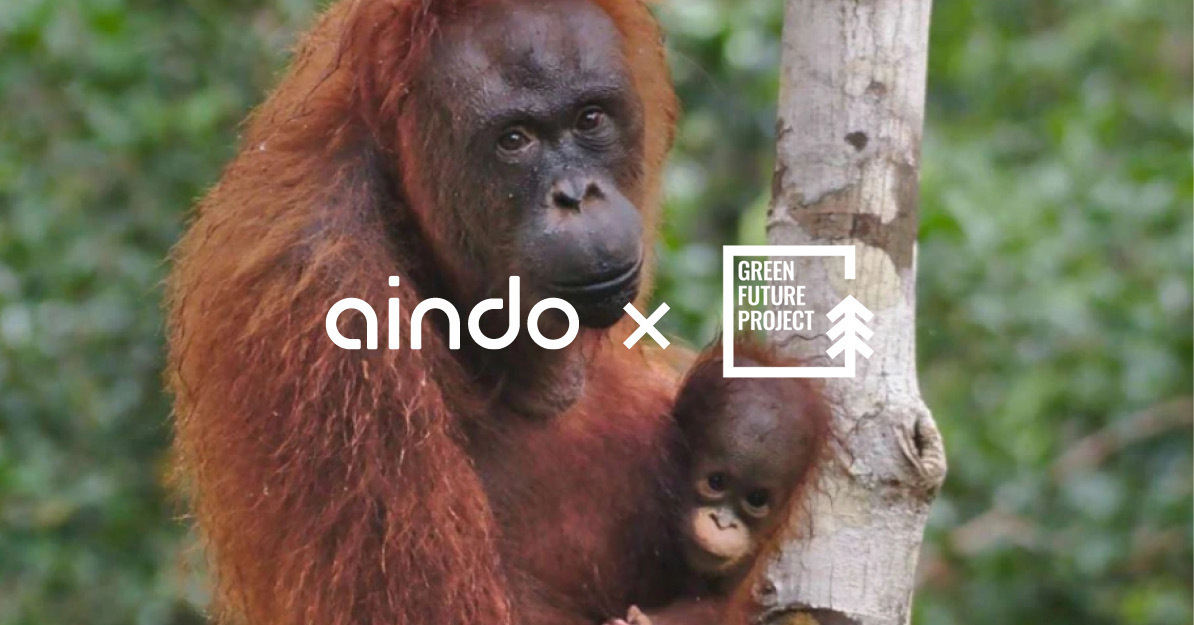
Thanks to the collaboration with Green Future Project and BizAway, Aindo supports the Rimba Raya Biodiversity Reserve in Indonesia.
Aindo hosted a strategic dialogue between institutions, industry, and research to define the future of data governance and regulatory access.
What we look for
Beyond your technical background, we look for:
What we offer
💡 Growth & Impact: join a fast-growing company where you’ll lead strategic projects, shape solutions and see the tangible impact of your work
🌴 Flexibility & Wellbeing: hybrid or fully remote work, ticket restaurant and health insurance
🤝 Collaborative Culture: work in autonomous teams with highly talented colleagues, in a supportive, innovative and ethical environment
How to apply
To apply, please send your CV and a motivation letter to [email protected], with the subject “Spontaneous Application - [Your Area of Expertise]”.
Aindo is an Equal Opportunity-Affirmative Action Employer – Minority / Female / Disability / Veteran / Gender Identity / Sexual Orientation / Age.